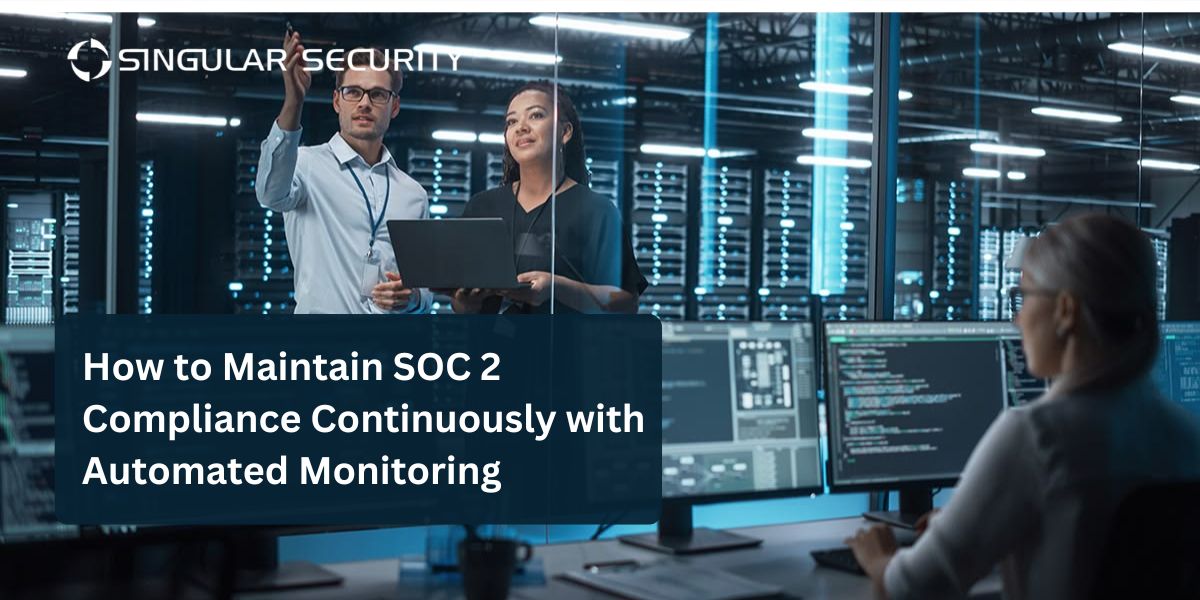
Continuous monitoring turns SOC 2 from a yearly scramble into a steady, year-round habit. Here’s how to build one that actually holds up.
Did you know that SOC 2 auditors expect evidence that security controls operate consistently throughout the audit period, not just at a single point in time? That’s why how to maintain SOC 2 compliance continuously is a growing priority for businesses. According to the AICPA, continuous monitoring and effective control operation are key to achieving and maintaining SOC 2 compliance.
Firms like Singular Security help organizations move from reactive scrambling to steady, automated oversight. This guide breaks down the exact steps that keep your controls audit-ready all year long.
Key Takeaways
- Continuous monitoring replaces the outdated annual audit scramble.
- All five SOC 2 trust categories need clear, ongoing evidence.
- Strong risk management starts with a full threat inventory.
- Automated tools cut manual errors and speed up audits.
- Vendor oversight and staff discipline prevent compliance gaps.
Why Continuous Compliance Beats the Annual Scramble
Old-school audits treated SOC 2 as a once-a-year project. Teams gathered evidence in a rush before the deadline. That approach creates gaps between what policy says and what actually happens. Auditors notice these gaps quickly. They now expect evidence collected across the full audit period, not just fieldwork week.
The Real Cost of Reactive Compliance
Manual tracking burns hours and invites human error. Staff miss renewals. Logs go unchecked for months. Each gap raises the odds of a failed audit finding.
Many growing firms lack the bandwidth to track every control by hand. This is where soc2 compliance consulting services prove useful. Experts map your controls, close gaps fast, and build systems that run on their own. Your team stays focused on core work instead of chasing spreadsheets.
Core Requirements Behind a Strong SOC 2 Program
Meeting SOC 2 compliance requirements means proving five trust criteria stay intact all year.
| Trust Category | What It Covers |
| Security | Access control, firewalls, intrusion detection |
| Availability | Uptime, backup, disaster recovery |
| Processing Integrity | Accurate, complete, timely system processing |
| Confidentiality | Protection of sensitive business data |
| Privacy | Handling of personal customer information |
Security applies to every SOC 2 report. The other four depend on your business model and client demands.
Mapping Controls to Daily Operations
Each requirement needs an owner, a review cycle, and a clear evidence trail. Skipping this step is the fastest way to fail recertification.
Building a Risk Management Plan That Actually Works
Strong SOC 2 risk management starts with an honest inventory of threats. List every system, vendor, and data flow that touches sensitive information. Then rank each risk by likelihood and impact.
Vendor and Third-Party Risk Tracking
Vendors often introduce hidden exposure. Review their security posture regularly. Require proof of their own compliance, such as a current SOC 2 report.
Companies handling card payments also benefit from pairing SOC 2 work with pci dss compliance services. Overlapping frameworks share several controls, so tackling them together saves time and budget.
Related Blog:-
How SOC Monitoring Services Detect Cyber Threats in Real Time
How Automated Monitoring Keeps You Audit-Ready Year-Round
Automated tools remove the guesswork from daily compliance work. They flag issues the moment a control drifts out of line.
Key benefits include:
- Real-time alerts when a control fails or drifts
- Continuous evidence collection instead of last-minute gathering
- Fewer manual errors in logs and access reviews
- Faster audits thanks to organized, ready evidence
- Lower staff burnout from constant manual checks
These systems turn compliance into a background process. Your team reacts to alerts instead of hunting for problems.
Choosing the Right Monitoring Stack
Pick tools that integrate with your existing cloud and identity systems. Native integrations cut setup time and reduce blind spots.
Common Mistakes That Break Continuous Compliance
Even strong programs slip up. Watch for these patterns:
- Treating SOC 2 as a one-time project, not an ongoing discipline
- Letting access reviews lapse between audits
- Ignoring vendor risk after onboarding
- Storing evidence in scattered, unlinked files
Fixing these habits early prevents costly findings later.
Ready to Simplify Your Compliance Journey?
Continuous compliance protects your reputation and your customer trust. It also saves your team from painful, last-minute audit prep. Singular Security helps businesses build monitoring systems that keep pace with evolving standards. Pair this work with regular cyber security assessment services to catch gaps before an auditor does. Start building your always-on compliance program today.
Also Read This Blog:-
Benefits of 24/7 SOC Monitoring Services for Modern Businesses
Frequently Asked Questions
Q1. How often should I review SOC 2 controls?
Review critical controls monthly and complete full audits at least once a year.
Q2. What is the difference between SOC 2 Type I and Type II?
Type I checks a single point in time. Type II checks controls over several months.
Q3. Can small businesses maintain SOC 2 compliance without a large team?
Yes. Automated monitoring tools and outside consultants make this manageable.
Q4. Does SOC 2 compliance expire?
Reports typically cover a 12-month window, so ongoing monitoring keeps you current.
Q5. How does automated monitoring reduce audit costs?
It keeps evidence organized year-round, cutting the time auditors spend gathering proof.