In the modern digital landscape, the “perimeter” of a business is no longer a physical office wall. As organizations migrate to the cloud, the new frontline of defense is identity. This is where Cloud Identity and Access Management (IAM) becomes the backbone of your organizational security.
“Did You Know? A study by Palo Alto Networks found that 99% of cloud identities are overly permissive, meaning users often have more access than they actually need, creating major cybersecurity risks.”
Key Takeaways
- Cloud IAM ensures only authorized users can access cloud systems and data.
- MFA and SSO improve both security and user experience.
- IAM supports compliance with GDPR, HIPAA, SOC2, and other regulations.
- Zero Trust and least privilege reduce the risk of breaches and insider threats.
- Regular audits and automated provisioning strengthen long-term cloud security.
At Singular Security, we recognize that managing who can see what and do what is the single most important factor in preventing data breaches.
What is Cloud Identity and Access Management?
At its core, Cloud Identity and Access Management is a framework of policies and technologies that ensures the right individuals have the appropriate access to technology resources. It is the gatekeeper of your cloud environment, verifying that a user is who they claim to be (authentication) and that they have permission to access specific data or applications (authorization).
Without a robust cloud identity management strategy, businesses risk “privilege creep,” where employees accumulate access rights they no longer need, creating massive vulnerabilities for hackers to exploit.
The Core Components of IAM
To understand how cloud access management works, it helps to break it down into its fundamental pillars. These components work in tandem to create a seamless yet secure user experience.
1. Identity Lifecycle Management
This involves the entire “life” of a user within your system—from the moment they are hired (onboarding) to their eventual departure (offboarding). Proper cloud identity management ensures that when an employee leaves, their access is revoked instantly across all cloud platforms.
2. Authentication (AuthN)
This is the process of verifying a user’s identity. Modern IAM solutions go beyond simple passwords, utilizing:
- Multi-Factor Authentication (MFA): Requiring two or more verification methods.
- Single Sign-On (SSO): Allowing users to log in once to access multiple applications.
- Biometrics: Using fingerprints or facial recognition for high-security environments.
3. Authorization (AuthZ)
Once identity is confirmed, authorization determines what the user is allowed to do. Using the principle of least privilege (PoLP), users are granted only the minimum level of access required to perform their job functions.
Why Is IAM Crucial for Modern Businesses?
The transition to remote work and multi-cloud environments has made traditional security measures obsolete. Here is why Cloud Identity and Access Management is now a non-negotiable requirement for IT infrastructure:
- Centralized Control: Managing identities across AWS, Azure, and Google Cloud from a single pane of glass.
- Reduced IT Costs: Automating password resets and provisioning reduces the burden on help desks.
- Enhanced User Experience: SSO allows employees to be more productive without juggling twenty different passwords.
- Regulatory Compliance: Many industries (HIPAA, GDPR, SOC2) require strict auditing of who accessed sensitive data.
The role of IAM in cybersecurity cannot be overstated. It acts as the “identity provider” that validates every request, ensuring that even if a network is breached, the lateral movement of an attacker is restricted.
Key Features of a Robust IAM Strategy
When implementing cloud access management, certain features are essential for maintaining a high security posture. Experts at Singular Security recommend focusing on the following technical capabilities:
Privileged Access Management (PAM)
Not all users are equal. Administrators with the power to change system settings or delete databases need extra layers of protection. PAM provides “just-in-time” access, giving admins elevated permissions only for the duration of a specific task.
Adaptive Authentication
This is “smart” security. If a user logs in from an unusual location or at 3 AM, the system can trigger additional security prompts or block the login entirely based on risk scoring.
Identity Governance and Administration (IGA)
IGA helps organizations meet cyber security and compliance standards by providing automated reporting and auditing tools. It ensures that access rights are reviewed periodically by managers to confirm they are still necessary.
Zero Trust Architecture
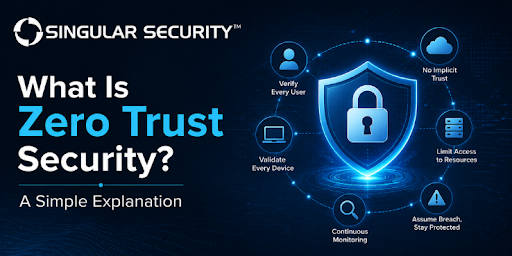
In a Zero Trust model, the system assumes that no user or device is trustworthy by default, even if they are inside the corporate network. Every access request is continuously verified.
The Benefits of Cloud Identity Management
Effective cloud identity management provides more than just security; it drives business agility. By streamlining how users interact with technology, organizations can scale faster.
- Improved Security Posture: By eliminating weak passwords and orphaned accounts, you close the most common entry points for cybercriminals.
- Regulatory Peace of Mind: Detailed logs provided by IAM tools make audits much simpler and less stressful.
- Scalability: As your company grows, IAM systems can handle thousands of new identities without requiring a proportional increase in manual labor.
Common Challenges in Implementing IAM
While the benefits are clear, the path to a perfect Cloud Identity and Access Management setup has its hurdles:
- Legacy System Integration: Connecting modern cloud IAM tools to old on-premise “legacy” applications can be complex.
- User Friction: If security measures are too intrusive (e.g., asking for MFA every five minutes), users may find workarounds that compromise security.
- Complexity of Roles: Defining “Roles” for thousands of employees across different departments requires careful planning and constant maintenance.
Working with a dedicated partner like Singular Security can help navigate these complexities, ensuring that your security measures enable rather than hinder your workforce.

Best Practices for Securing Cloud Access
To get the most out of your cloud access management investment, consider these industry-standard best practices:
- Enforce MFA Everywhere: There is no excuse for not using MFA in 2026. It stops the vast majority of identity-based attacks.
- Audit Regularly: Perform “access reviews” at least quarterly to ensure permissions haven’t “crept” beyond what is necessary.
- Automate Provisioning: Use HR software triggers to automatically create or delete IT accounts based on employment status.
- Educate Your Staff: Even the best IAM tool can be bypassed by a successful social engineering attack. Continuous training is vital.
The Future of Identity
As we look toward the future, Cloud Identity and Access Management is evolving to include Artificial Intelligence. AI can now predict potential breaches by analyzing billions of login patterns and identifying anomalies faster than any human operator could. This proactive approach turns IAM from a reactive gatekeeper into a predictive shield.
In an era where data is the most valuable currency, protecting access to that data is paramount. A comprehensive Cloud Identity and Access Management strategy ensures that your business remains resilient, compliant, and ready for whatever the digital world throws at it next.
Secure Your Future with Singular Security
Don’t leave your cloud environment vulnerable to unauthorized access. At Singular Security, we specialize in designing and deploying custom IAM solutions that fit your unique business needs. Whether you are looking to streamline your cloud identity management or need to bolster your cloud access management to meet strict compliance standards, our team of experts is here to guide you every step of the way.
Ready to strengthen your security perimeter? Contact Singular Security today and take the next step toward smarter, stronger cyber protection.
Also Read This Blog:-
How Customer Identity and Access Management Enhances User Experience and Security
Frequently Asked Questions
Q1. What is Cloud IAM?
Cloud Identity and Access Management (IAM) is a system that controls user identities and access permissions in cloud environments.
Q2. Why is IAM important in cybersecurity?
IAM prevents unauthorized access, limits insider threats, and protects sensitive business data.
Q3. What is the difference between authentication and authorization?
Authentication verifies identity, while authorization determines what resources a user can access.
Q4. How does MFA improve cloud security?
Multi-Factor Authentication adds extra verification steps, making it harder for attackers to gain access.
Q5. Can IAM help with compliance requirements?
Yes, IAM provides audit trails, access controls, and reporting features needed for compliance standards like GDPR, HIPAA, and SOC2.