Micro-segmentation paired with continuous identity verification stops attackers from moving sideways once they breach your network. Stick around, because most businesses still get this wrong.
Did you know? According to Gartner, 78% of organizations implementing a zero-trust strategy, this investment represents less than 25% of the overall cybersecurity budget.
That’s a long time for a hacker to sit undetected. So, what’s the best zero trust solution for blocking lateral threats? It comes down to strict access controls, network segmentation, and real-time monitoring, working together. Let’s break down how these pieces actually fit.
Key Takeaways
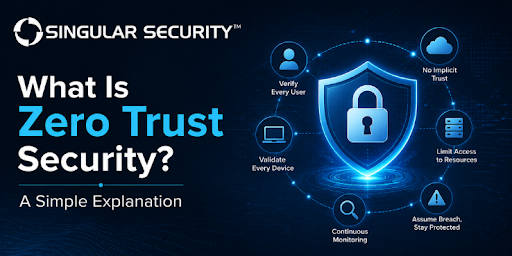
- Micro-segmentation is a technique of network division into multiple isolated micro-segments so that a single breach cannot reach other areas of the network.
- Attackers usually take advantage of legitimate admin tools to carry out lateral movement, making it hard to spot early.
- Monitoring internal traffic in a real-time manner can help detect threats that perimeter-only firewalls and gateways always miss completely.
- Implementation of least-privilege access will reduce the number of things that one account can access, thereby rapidly closing the window of opportunity for attackers on your entire system.
- A phased zero trust rollout works well for small teams and large enterprises alike, over time.
Picking a Zero Trust Approach That Actually Stops Lateral Threats
Here’s the thing: not every zero trust tool blocks lateral movement equally well. Some vendors focus only on login security and call it a day. Others ignore what happens after a hacker gets inside, which is where the real damage happens. The best setups assume a breach will happen anyway. They limit how far an attacker can travel once they’re in.
How Attackers Move Sideways After a Breach
Attackers rarely stop at one compromised device, unfortunately. They use stolen credentials to jump between systems, often quietly. This is called lateral movement. It lets a single weak password snowball into a full network compromise. Good segmentation blocks that jump before it even starts.
Why Lateral Movement Threatens Every Network
Lateral movement is sneaky because it hides in plain sight. Attackers often use the same admin tools your IT team uses, which helps them blend right in. Traditional firewalls only guard the perimeter, nothing more. Once inside, hackers roam freely between servers, apps, and cloud accounts.
Signs Your Network Lacks Lateral Protection
Not sure where your network stands? Watch for these red flags:
- Flat network design with no internal segmentation
- Shared admin credentials across systems
- No real-time alerts for unusual internal traffic
- Limited visibility into east-west traffic patterns
Core Building Blocks of Strong Zero Trust Security Solutions
Effective zero trust security solutions rest on a few non-negotiable pillars. Skip even one, and attackers will find the gap.
| Component | What It Does | Why It Matters |
| Micro-segmentation | Splits the network into small zones | Contains breaches to one zone |
| Identity verification | Confirms every user and device | Blocks stolen-credential access |
| Least privilege access | Grants only necessary permissions | Shrinks the attack surface |
| Continuous monitoring | Watches internal traffic in real time | Flags lateral movement fast |
Based on working with mid-sized businesses across industries, we’ve consistently seen one thing: segmentation alone cuts breach containment time in half.
Steps for a Zero Trust Strategy for Businesses
A solid zero trust strategy for businesses doesn’t need a massive budget. Honestly, it just needs the right sequence.
- Map every device, user, and application on your network.
- Segment critical assets into isolated zones.
- Enforce multi-factor authentication everywhere.
- Apply least-privilege access to all accounts.
- Monitor internal traffic continuously for anomalies.
- Test your defenses with regular simulated attacks.
Small businesses can start with segmentation and MFA alone, and that’s genuinely enough for a while. Larger enterprises, though, need full identity governance layered on top.
Common Mistakes Businesses Make with Zero Trust
Many teams treat zero trust as a one-time project, checked off and forgotten. In reality, it’s an ongoing process. Others buy tools without mapping their network first. That leaves blind spots attackers can exploit within weeks.
Businesses also spend too much time asking what’s the best zero trust solution for blocking lateral threats without first identifying where lateral movement is actually possible in their own environment. Another mistake? Ignoring internal traffic monitoring entirely. Perimeter defense alone just can’t catch a hacker who’s already inside. Real protection watches what happens after the front door closes.
Pro Tips to Strengthen Your Setup
A few small habits go a long way here:
- Rotate credentials on a strict schedule.
- Isolate legacy systems that can’t support modern authentication.
- Review access permissions every quarter, not once a year.
- Pair automated alerts with a human review process.
None of these take much effort, but they close gaps that automated tools alone tend to miss.
Build a Stronger Zero Trust Security Strategy!
Waiting for a breach to expose your network’s weak spots is a costly gamble. Act now, before attackers find the gap first. A trusted cybersecurity service provider can map your risks and close them fast.
Singular Security helps businesses design zero trust frameworks built around real threats, not generic checklists. Ready to see where your network stands? Visit Singular Security to start building a stronger defense today.
Also Read This Blog:-
Frequently Asked Questions
Q1. What is the most effective zero trust solution for blocking lateral movement?
The best zero trust solution for stopping lateral movement is when you implement two different solutions, like micro-segmentation plus continuous identity verification. Both techniques together prevent attackers from moving within the company’s systems after the initial attack. So, the best is a combination of the two methods.
Q2. What role does zero trust play in stopping lateral movement in a network?
It denies access to everything except what each user actually needs. This is a way to keep the user who’s been hacked from spreading throughout the network by making them very limited in what they can do internally.
Q3. Is zero trust right for smaller businesses?
Yes. Small businesses could adopt just segmentation and multi-factor authentication. These are enough to make a big difference in breach prevention.
Q4. What is the difference between perimeter security and a zero trust approach?
Security at the perimeter works by defending only the outer edges of the network, whereas in the zero trust model, threats are thought to be present within the network. Because of this, every request is continuously verified.
Q5. How long does it take to implement a zero trust strategy?
Timelines vary depending on network size. Most businesses see meaningful protection within three to six months of a phased rollout.