Weak access controls open the door to breaches, and the fixes are simpler than most teams think. Every user account, device, and application creates a potential entry point for attackers. Without strong identity controls, even a single compromised login can put sensitive business data at risk.
Did you know? According to Verizon’s Data Breach Investigations Report 2026, the use of stolen credentials holds steady at 36%, continuing its long-running role as an attacker favorite.
Key Takeaways
- Stolen credentials still top the list as the biggest reason for security breaches all over the world. So, every company must implement stronger authentication methods and enhance password security.
- When too many permissions are granted and the offboarding process is not handled properly, some accounts might be left active without anyone remembering them. Such accounts pose security risks that hackers can easily take advantage of.
- Multi-factor authentication and Zero Trust approaches are two strong methods of adding security layers that could prevent unauthorized access when passwords are stolen.
- Ongoing monitoring identifies unusual login attempts and user behavior abnormalities, which assist the security staff in halting attacks before major damage occurs.
- Automated identity governance not only simplifies access evaluations and compliance documentation but also frees up time and reduces expensive human errors occurring during audits.
That number alone should worry every IT leader out there. Businesses that invest in solid identity and access management services reduce this risk by a wide margin. Yet plenty of organizations still limp along with outdated access rules, weak authentication, and permission structures nobody’s cleaned up in years. This guide walks through the most common IAM challenges teams face and how to actually fix them. So, read until the end!
Why Identity and Access Management Services Matter Now
Every company runs on logins. Employees, vendors, apps, all of them need access to something. Without a clear framework, that access turns messy fast. Identity sprawl happens when accounts pile up across a dozen tools with nobody keeping watch. That’s exactly the kind of blind spot attackers go looking for.
Good IAM isn’t just a technical checkbox to tick off. It protects revenue, reputation, and the trust customers place in you. Companies that treat it as an afterthought usually end up paying for it later, often through a breach or a failed audit nobody saw coming.
Top Identity Management Risks Facing Businesses Today
Most organizations run into the same handful of identity management risks. Here are the most common ones:
Weak Password and Authentication Practices
Simple passwords are still one of the easiest ways for attackers. Employees reuse the same login across personal and work accounts constantly. Skip multi-factor authentication, and one leaked password can expose an entire network overnight.
Related Blog:-
Excessive User Permissions
A lot of employees hold onto access they don’t need anymore. Projects wrap up, but the permissions stick around anyway. This breaks the principle of least privilege and quietly widens your attack surface.
Poor Visibility Into Access Activity
Ask most security teams who accessed what, and when, and you’ll get a shrug. Without solid logging in place, access control issues slip by unnoticed until the damage is already done.
Manual and Inconsistent Offboarding
When someone leaves the company, their access should shut off right away. In reality, plenty of companies drop the ball here. Former employees sometimes keep working logins for weeks after they’re gone.
Fragmented Systems Across Departments
Different teams often run separate tools with no shared identity system tying them together. That fragmentation breeds duplicate accounts, inconsistent rules, and gaps attackers are more than happy to walk through.

How to Solve These Access Control Issues
Fixing these IAM challenges with the help of cyber security service provider takes a real strategy. Here’s a breakdown of each problem and what actually works against it.
| IAM Challenge | Practical Solution |
| Weak authentication | Enforce multi-factor authentication everywhere |
| Excessive permissions | Run least-privilege access reviews every quarter |
| Poor visibility | Set up centralized logging and alerts |
| Manual offboarding | Automate account deprovisioning |
| Fragmented systems | Move to a single sign-on platform |
Companies running centralized identity platforms see far fewer unauthorized access incidents than those still juggling accounts across scattered tools by hand.
Building a Zero Trust Access Model
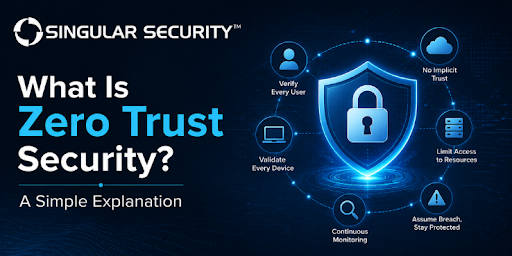
A Zero Trust approach starts from the assumption that no user or device gets automatic trust. Every request gets checked, no matter where it’s coming from. It’s a model that closes gaps traditional perimeter security tends to miss.
Automating Identity Governance
Manual reviews eat up time and leave room for human error. Automated governance tools catch unusual access patterns almost instantly. They also make compliance reporting a lot less painful come audit season, whether that’s SOC 2 or HIPAA.
Strengthening Access Through Ongoing Oversight
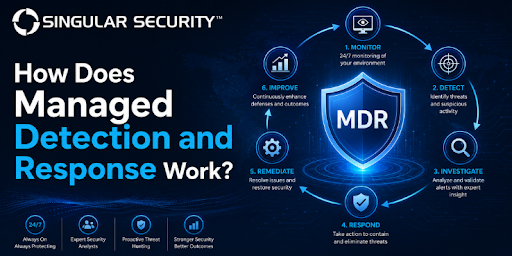
Rolling out strong IAM policies isn’t something you do once and forget. Pair it with continuous security monitoring, and your team catches suspicious activity long before it turns into a breach. That ongoing oversight is what closes the gap between what your policy says and what’s actually happening.
Working with organizations across finance, healthcare, and tech over the years, one pattern keeps showing up: companies that pair automated access reviews with real-time monitoring see noticeably fewer incidents than those still relying on annual audits alone.
Protect Your Business with Smarter Access Controls!
Don’t wait around for a breach to expose the gaps you already suspect are there. Strong identity and access management services protect your data, your team, and the customers who trust you with their information. Partnering with an experienced cybersecurity service provider gives you the tools and know-how to close these gaps quickly. Singular Security helps businesses build identity frameworks that actually hold up under real pressure, not just on paper.
Also Read This Blog:-
Identity Management and Access Control in Cloud Computing Explained
Frequently Asked Questions
Q1. What kind of IAM-related challenges do companies face mostly?
Most typical issues with IAM are that authentication is not strong enough, users have more permissions than they need, access visibility is limited, the process of offboarding is not done uniformly, and the combination of different identity systems results in security risks and compliance problems.
Q2. Why is multi-factor authentication crucial for IAM?
Multi-factor authentication verifies the user’s identity through an additional step besides the password. This narrows down and virtually eliminates the chances of the attackers being able to infiltrate business systems, even if user credentials are stolen or leaked.
Q3. How frequently should companies review user access?
The general recommendation is for the user access to be checked at least quarterly and also immediately after any employee’s role changes, promotions, transfers, or departures so that the level of permissions is kept precisely aligned.
Q4. What is the principle of least privilege?
To minimize the risk of insider threat, accidental data leakage, and unauthorized exposure, the principle of least privilege limits users’ access rights only to those resources that are necessary for them to perform their work activities.
Q5. How does continuous monitoring improve identity security?
Continuous monitoring keeps a record of user activities like login, permission change, etc., with immediacy in a normal situation so that security personnel can identify a threat very rapidly and react in time to mitigate the damage caused by an attacker.